
Warehouse

A time-critical retagging project reframed around outcomes—not hours—delivering fewer labor hours and material savings.
When a multi-national retailer faced an unplanned retagging initiative tied to an acquisition, the operation needed to process 1M+ units inside a fixed window—without a pre-allocated budget and amid rising labor costs.
Array partnered with site leadership to align incentives to productivity and deliver the required output with fewer total hours and a lower total cost.
UNITS DELIVERED
HOURS REQUIRED
SAVINGS
Customer + Engagement Overview
The customer required rapid execution at scale in a distribution environment where throughput and labor efficiency directly impact cost and delivery risk.

Customer:
Multi-national Retailer

Industry:
Distribution / Retail Operations

Customer Sponsor:
DC Manager (site leadership)

Engagement Type:
Operational project delivery (retagging)

Timeframe:
Summer 2025

SCOPE:
1,000,000+ units retagged
The Operational Challenge
An acquisition created an unplanned project requiring 1M+ units to be retagged on a tight timeline. With no pre-allocated budget and rising labor costs, the mandate was simple: complete the work at the lowest possible total cost—either by lowering markup or increasing productivity.
Constraints
 Fixed delivery window: 2 Months
- Budget pressure with no pre-allocation
- Labor costs rising (needed savings through model change)
Baseline Snapshot
- Pay Rate:$18.50/hr
- Bill Rate:$26.36/hr (42.5% markup)
- Baseline Productivity:80 UPH
- Hours at Baseline:12,500
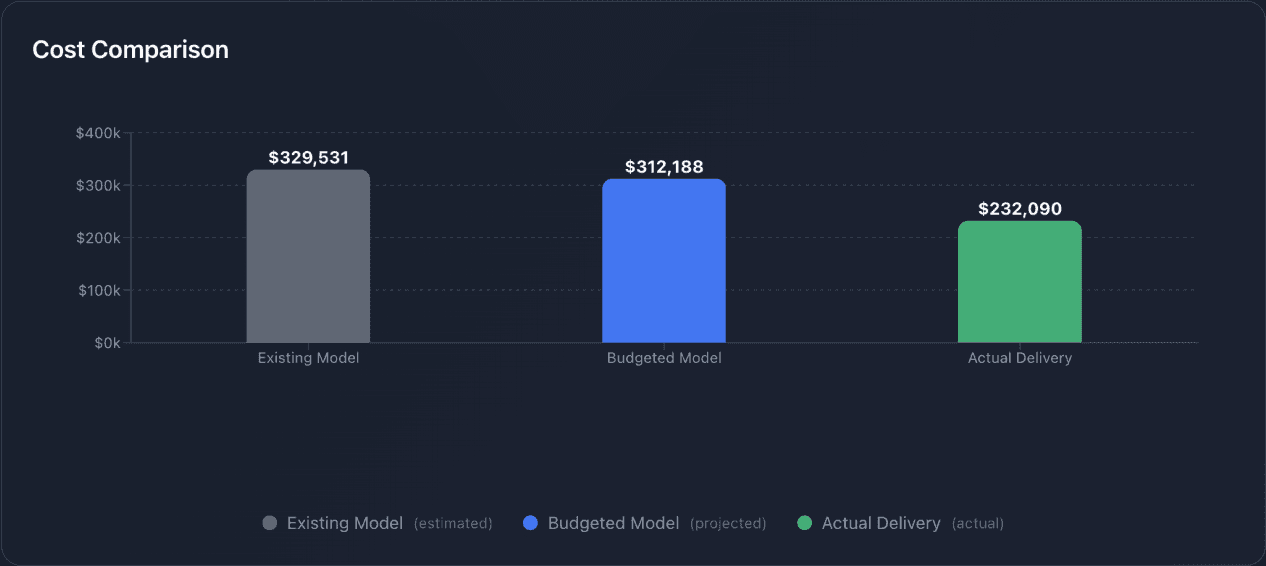
- Estimated Cost at Baseline:$329,531
How Array Solved It
A performance-aligned operating model that connected pricing to output—not hours.
Array reframed the engagement around measurable productivity outcomes and used a performance-based pricing structure that rewarded higher throughput while reducing total cost. This was not a “more labor” solution—it was a better execution model.
Aligned Incentives to Productivity (Outcomes-Based Pricing)
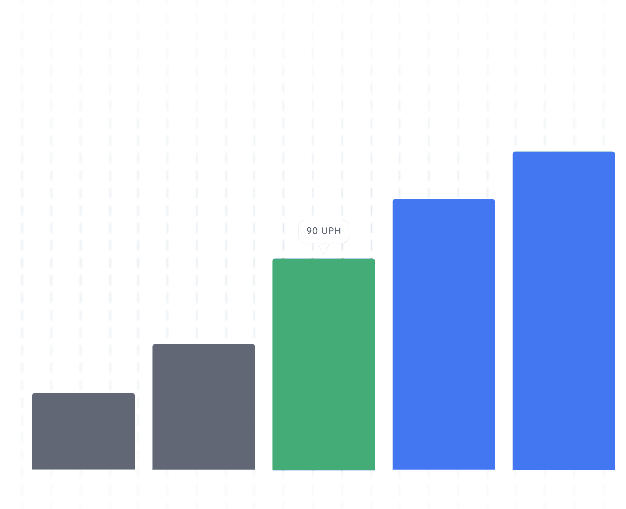
Array implemented a dual-rate model that reduced standard markup while allowing modest upside only when productivity exceeded a defined target.
Pricing Mode
Lower Standard Markup (35%) → Bill Rate: $24.98/hr
Bonus Markup (38%) → Bill Rate: $25.53/hr when exceeding 90 UPH
The customer budgeted $312,188 to complete the project—this structure protected budget while creating a direct incentive for higher output.
New Model
Results Delivered
Higher productivity reduced hours—hours reduction delivered savings.

Actual Productivity:
110 UPH (+37.5% vs baseline)

UNITS delivered:
1,000,000+

hours required:
9,091 (vs. 12,500 baseline)
Cost comparison
What This Proves
This project demonstrates that productivity variance is actionable—and that aligning incentives to output can deliver meaningful savings without cutting wages or expanding headcount. By paying for results instead of time, the customer achieved faster execution, fewer labor hours, and lower total cost under intense constraints.
Outcomes-aligned pricing can reduce total cost even when paying “more” for higher performance
Productivity gains translate directly into hours saved
Hours saved compound into budget protection and delivery confidence